Buy links on this page go through our /go/ redirects to the manufacturer or retailer. We earn nothing from them today; that may change. Disclosure.
In short
Check the pressure with a gauge before anything else. Continental Tire says the light comes on when a tire is about 25% below its recommended pressure, and a tire that low can still look normal. If the light flashes first and then stays on, that's a different problem: the system itself.
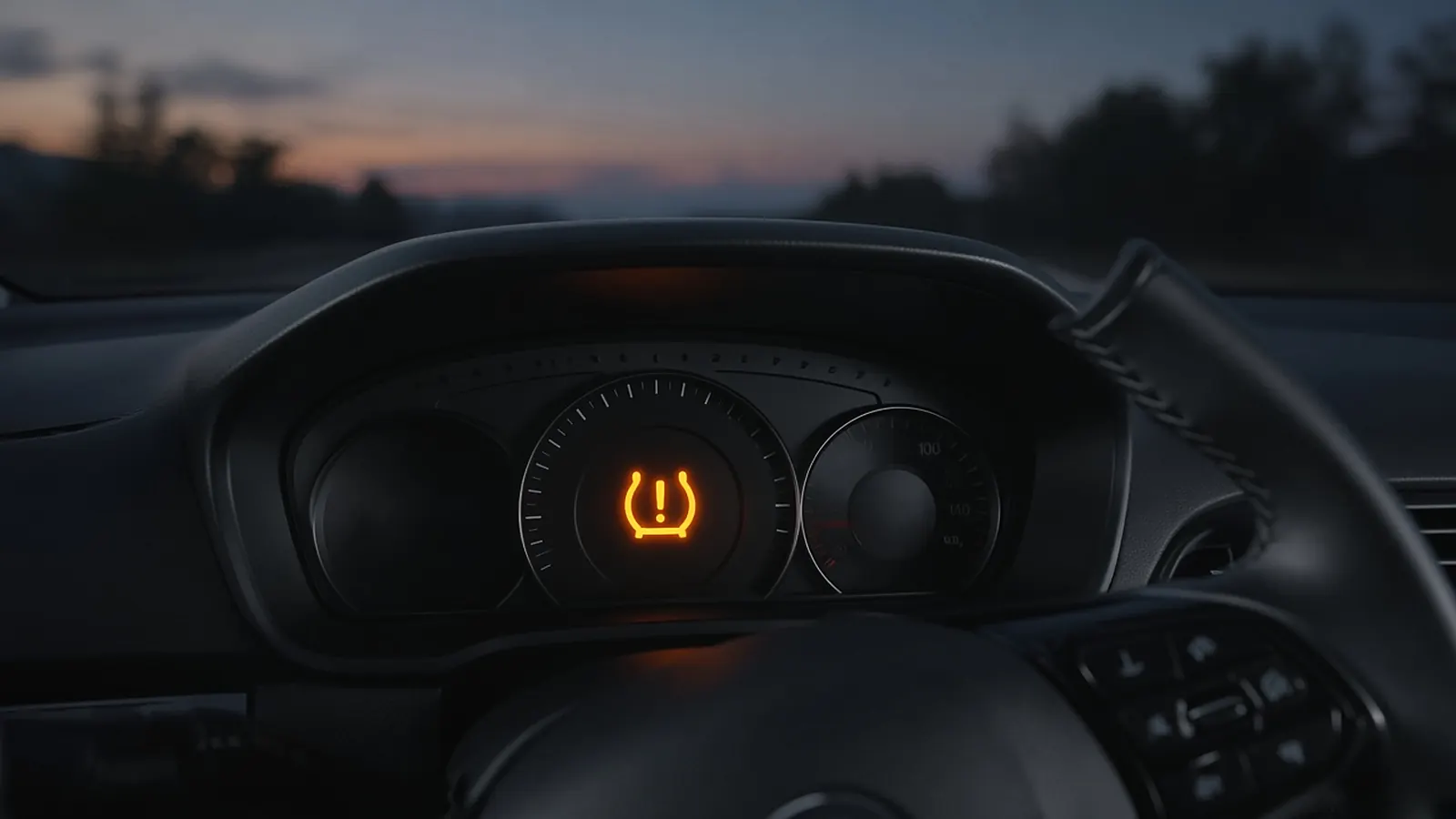
1. Is the light solid or flashing?
- Solid: at least one tire is low. Continental's example: a tire meant to be at 35 PSI would trigger the light at around 26 PSI.
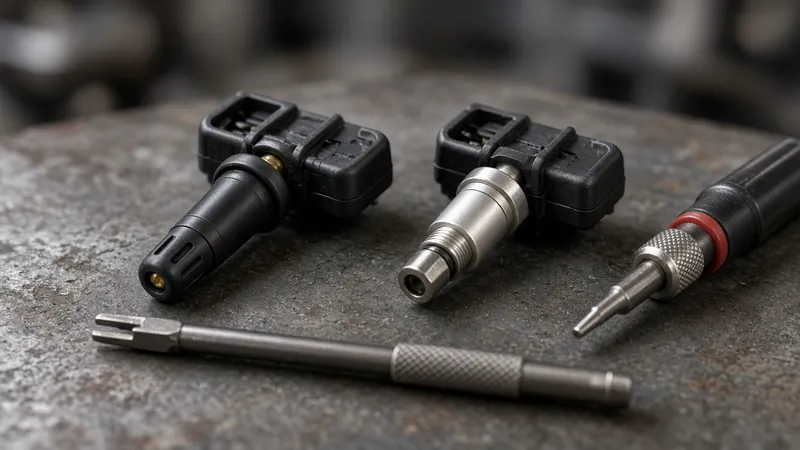
- Flashing for 60 to 90 seconds, then solid: the system has a fault, such as a dead sensor battery, a damaged sensor or an electronics problem. Adding air won't fix it. See TPMS sensor battery replacement.
2. Gauge all four tires, cold
Check before driving, when the tires are cold. Driving warms them and raises the reading. Continental also says tires lose about 1 to 2 PSI a month on their own, so a car that hasn't been checked in a while can drift low without a puncture.
3. Check the spare
Some cars monitor the spare tire too. If all four road tires are right, a low spare can still keep the light on.
4. Use the door jamb number
Fill to the pressure on the sticker inside the driver's door jamb, not the maximum printed on the tire's sidewall. Some cars list different front and rear pressures.
5. Cold snap or recent tire rotation?
Continental says pressure drops about 1 PSI for every 10°F drop in temperature, so a 70°F day followed by a 30°F morning takes off about 4 PSI. That's why the light often shows up on the first cold morning of the season.
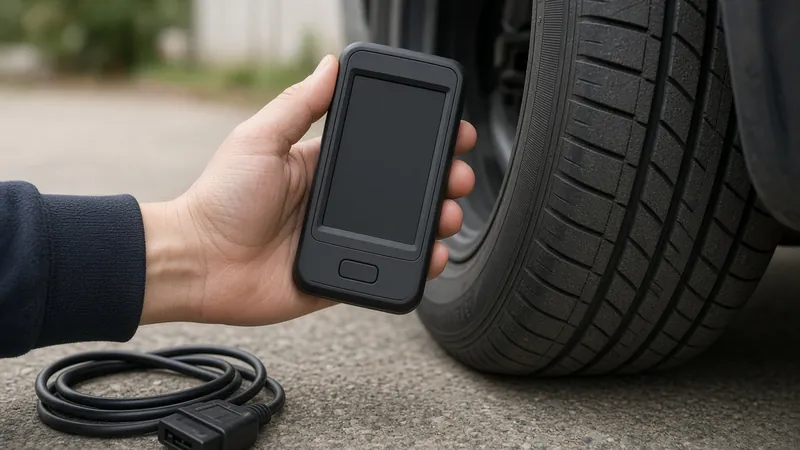
After a rotation, Continental says some cars relearn sensor positions on their own within 10 to 50 miles, and others need a reset. Schrader says a relearn is needed when wheels are rotated or sensors replaced. More in TPMS relearn tools.
Resetting the light
Once pressures are right, many cars clear the light after a short drive. Continental says some cars use a reset button (it lists Toyota, Nissan and Honda), some use a menu in the dash (Ford, GM and Chrysler), and some reset by driving. Your owner's manual has the exact steps.
Light keeps coming back for one tire? That tire may have a slow leak. A tire shop can check for a nail or a leaking valve stem.
Questions people ask
Why is my TPMS light on when my tires look fine?
A tire can be well under pressure and still look normal. Continental Tire says the light comes on when a tire is about 25% below its recommended pressure. Check all four with a gauge, plus the spare if your car monitors it.
What does a flashing TPMS light mean?
Continental Tire says a light that flashes for 60 to 90 seconds and then stays on means a problem with the system itself, such as a dead sensor battery or a damaged sensor, not just low pressure.
Why does my TPMS light come on when it's cold?
Tire pressure drops about 1 PSI for every 10°F drop in temperature, per Continental Tire. A cold morning can push a tire that was a little low below the warning point.
What pressure should my tires be?
Use the number on the sticker in the driver's door jamb, not the maximum printed on the tire. Check it when the tires are cold, before driving.
Sources
Last checked Oct 25, 2026. Light meanings, battery life and relearn steps come from Continental Tire, Schrader and Autel's own pages. Prices change, so check the listing before you buy.