In short
If water is spilling into the overflow tube, the fill valve is the problem, not the flapper: lower the float, flush out debris, or replace the valve. If the tank slowly loses water with the supply off, check the chain (a little slack), then the flush valve seat under the flapper, and make sure the new flapper is the right size and frame. Fluidmaster and Korky both start with the same split: is water getting in too high, or leaking out at the bottom?
Turn off the supply valve behind the toilet before you reach into the tank or take the fill valve apart. If water is coming out onto the floor, Fluidmaster says to shut it off right away and find where it's coming from.
1. Water is spilling into the overflow tube
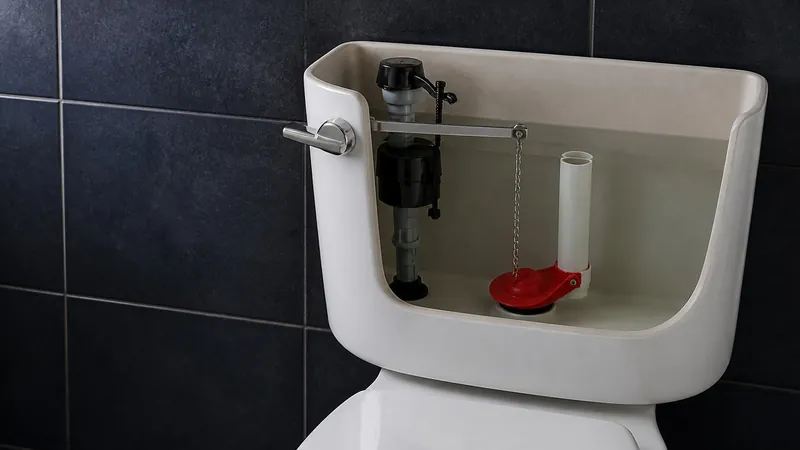
Lift the lid with the water on and watch the tank fill. Fluidmaster's first test: is the water rising so high it drains into the overflow pipe? If yes, it's the fill valve.
- Set the level. Fluidmaster and Korky both say the water should stop about ½ inch below the top of the overflow tube. On a Fluidmaster 400A, turn the adjustment screw counterclockwise to lower the float. Korky says a fill valve set too high "won't shut off".
- Flush out debris. Fluidmaster's cleaning steps: water off, remove the valve cap, hold a cup upside down over the opening and turn the water on full for 10-15 seconds, then reassemble.
- Still won't shut off? Both makers say to replace the fill valve. Korky says a non-Korky valve is better replaced whole than serviced.
Fluidmaster's 400A sheet also says the refill tube must feed water down the overflow pipe. Clip it to the overflow pipe as the instructions show.
2. The chain is too tight (or too loose)
A chain with no slack holds the new flapper slightly open, so it never seals. Korky recommends leaving only 1 to 2 links of slack; Fluidmaster's 400A sheet says about ½ inch. Korky also warns that loose links can fall into the drain opening and stop the flapper sealing, and that a chain that is too loose won't lift the flapper fully (a weak flush).
3. Do the pencil-mark test
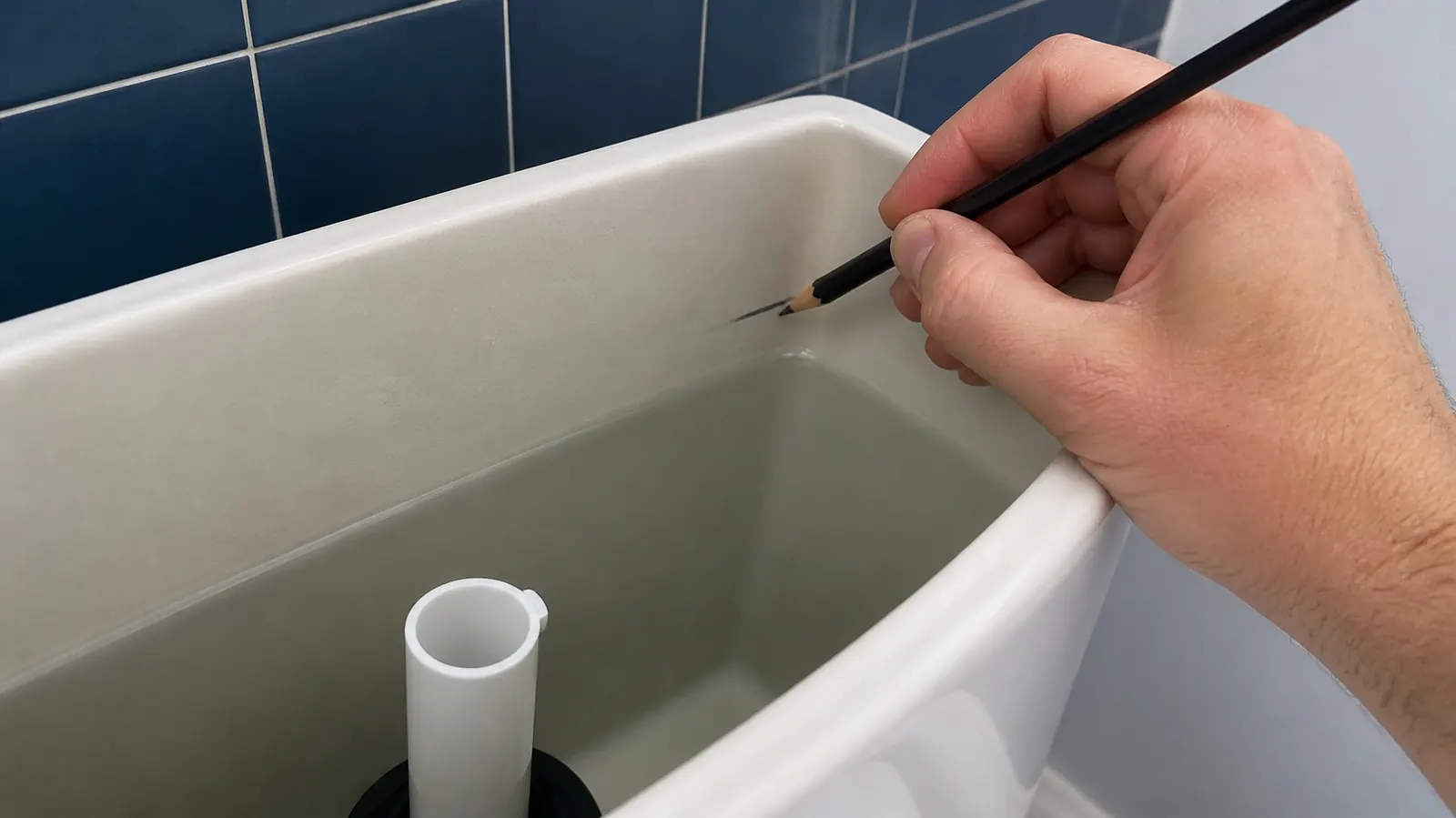
This tells you whether water is still leaking out past the flapper.
- Let the tank fill, then mark the water level on the inside of the tank with a pencil.
- Turn the supply valve off. Fluidmaster says wait 10-15 minutes; Korky says at least 25 minutes.
- If the level drops, something in the tank is leaking. Korky: leave it a couple of hours. If it stops at the flapper or flush seal, replace the flapper or seal. If it drops to a point on the overflow tube or to the bottom of the tank, replace the flush valve.
The EPA's version: put a few drops of food coloring in the tank and wait 10 minutes without flushing. Color in the bowl means a leak. Flush afterward so it doesn't stain.
A fill valve that turns on and off by itself every so often is the same symptom: Korky and Fluidmaster both say the tank is losing water and the fill valve is just topping it up.
4. The flush valve seat is dirty or damaged
A new flapper can't seal on a bad seat. Korky says to inspect the sealing surface for debris, mineral deposits or visible damage, clean off deposits, and replace the flush valve if it's cracked or warped. Fluidmaster's step after a new flapper that still drains down: replace the flush valve, a 2-inch or 3-inch to match your tank.
5. The new flapper is the wrong size or frame
Korky's running-toilet guide says to make sure the flapper matches the size of the flush valve opening. A 2-inch flapper on a 3-inch valve won't cover the hole. Fluidmaster adds that a flapper that won't close can mean an oversized flush valve making it stick, and that swapping a solid-frame flapper for an all-rubber one can fix that. If your tank uses a tower or canister flush valve, it needs a model-specific seal, not a flapper. See 2-inch vs 3-inch.
Water is running, but not inside the tank
Fluidmaster: if you see water on the floor, check whether it's coming out at the lid or the handle (replace the fill valve and flush valve) or from the bottom of the tank (replace the tank bolts and washers).
Questions people ask
Why does my toilet still run after replacing the flapper?
Check whether water is spilling into the overflow tube (a fill valve problem), whether the chain is too tight, and whether the tank loses water with the supply off. Korky and Fluidmaster both say a tank that slowly drains points to the flapper, its seat or the flush valve.
How high should the water be in a toilet tank?
Fluidmaster and Korky both say about ½ inch below the top of the overflow tube. Higher than that and water runs into the overflow tube; lower and the flush can be weak.
How do I know if the flapper is leaking?
Mark the water level, turn off the supply and wait (Fluidmaster says 10-15 minutes, Korky at least 25). If the level drops, the tank is leaking. The EPA's test: a few drops of food coloring in the tank, and color in the bowl after 10 minutes means a leak.
Sources
Fetched and checked 2026-10-21. Parts and instructions change; check the maker's instructions for your part before buying.
- Fluidmaster: Constantly running toilet, common causes and solutions
- Fluidmaster 400A fill valve instructions (water level, refill tube, chain slack) (PDF)
- Fluidmaster 400CRP fill valve instructions, troubleshooting (PDF)
- Korky: How to fix a running toilet
- Korky: How to replace a toilet fill valve (height, cycling on and off)
- Fluidmaster: 2" or 3" flush valve and flapper (flapper not closing, all-rubber vs solid frame)
- EPA WaterSense: Detect and chase down leaks checklist (food-coloring test) (PDF)