In short
On a modern toilet the flapper is meant to drop early: Fluidmaster says toilets from 1994 on are designed to use less water, so their flappers close sooner. If the flush is now weak, set the new adjustable flapper to stay open longer (dial, band or float), give the chain a little slack, and check the tank fills to about ½ inch below the overflow tube. Don't put an adjustable flapper on a toilet made before 1994.
Korky's method below uses the old flapper as the target: mark where the water level dropped to with the old flapper, then adjust the new one until it matches within ½ inch.
Why the new flapper drops so fast
Fluidmaster's explanation: older toilets (1984 and before) were designed to use all the tank water, so their flappers stayed open longer. Toilets from 1994 to now flush with less water, so the flapper closes sooner. Fluidmaster says traditional flappers use trapped air to stay open; adjustable flappers let that air out on purpose so they close on time for a 1.28 or 1.6 gallon-per-flush toilet.
That's also why the type matters: Fluidmaster says adjustable flappers "should not be used on toilets made before 1994", and its non-adjustable flappers are for 3.5 and 5+ gallon toilets.
1. Mark the level
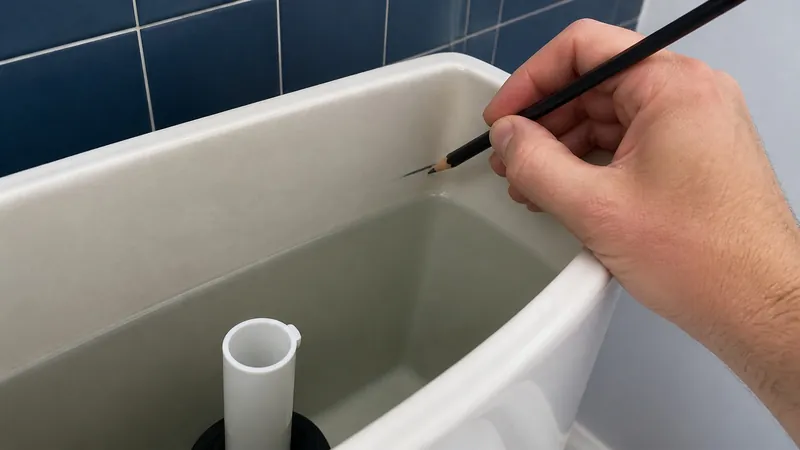
Korky's install steps start before you remove the old flapper: flush and mark with a pencil where the water level drops to inside the tank. That mark is the target for the new flapper.
2. Adjust the flapper
How you adjust depends on the flapper. Fluidmaster lists three ways:
- Dial or cone setting: turn the cone from minimum to maximum. Fluidmaster says this traps air in the cone longer, so the flapper stays open longer.
- Float on the chain: lower the float on the chain to keep the flapper open longer; move it up the chain to make it close faster.
- Cone window: pull slightly on the cone and turn it toward maximum to close the cone window, which also keeps it open longer.
Korky flappers use a red or white band. Korky's steps: turn the water off and flush. If the level stops above your pencil mark, turn the band to the next higher number, which closes off holes so the flapper floats longer. Repeat until the water drops to within ½ inch of the mark.
3. Check the chain
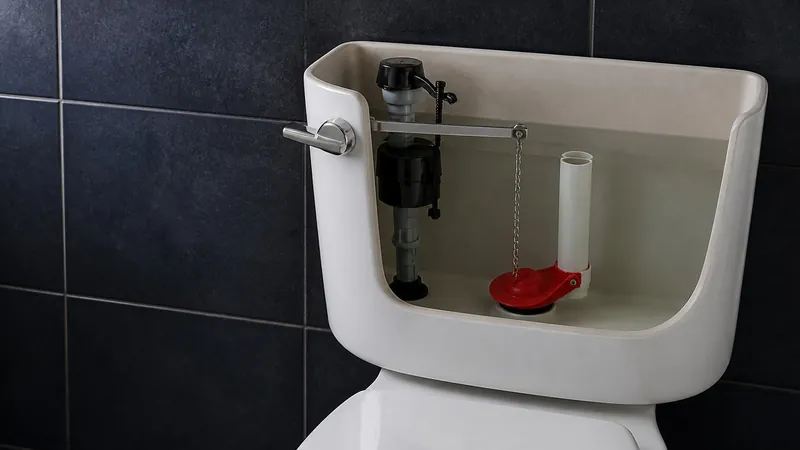
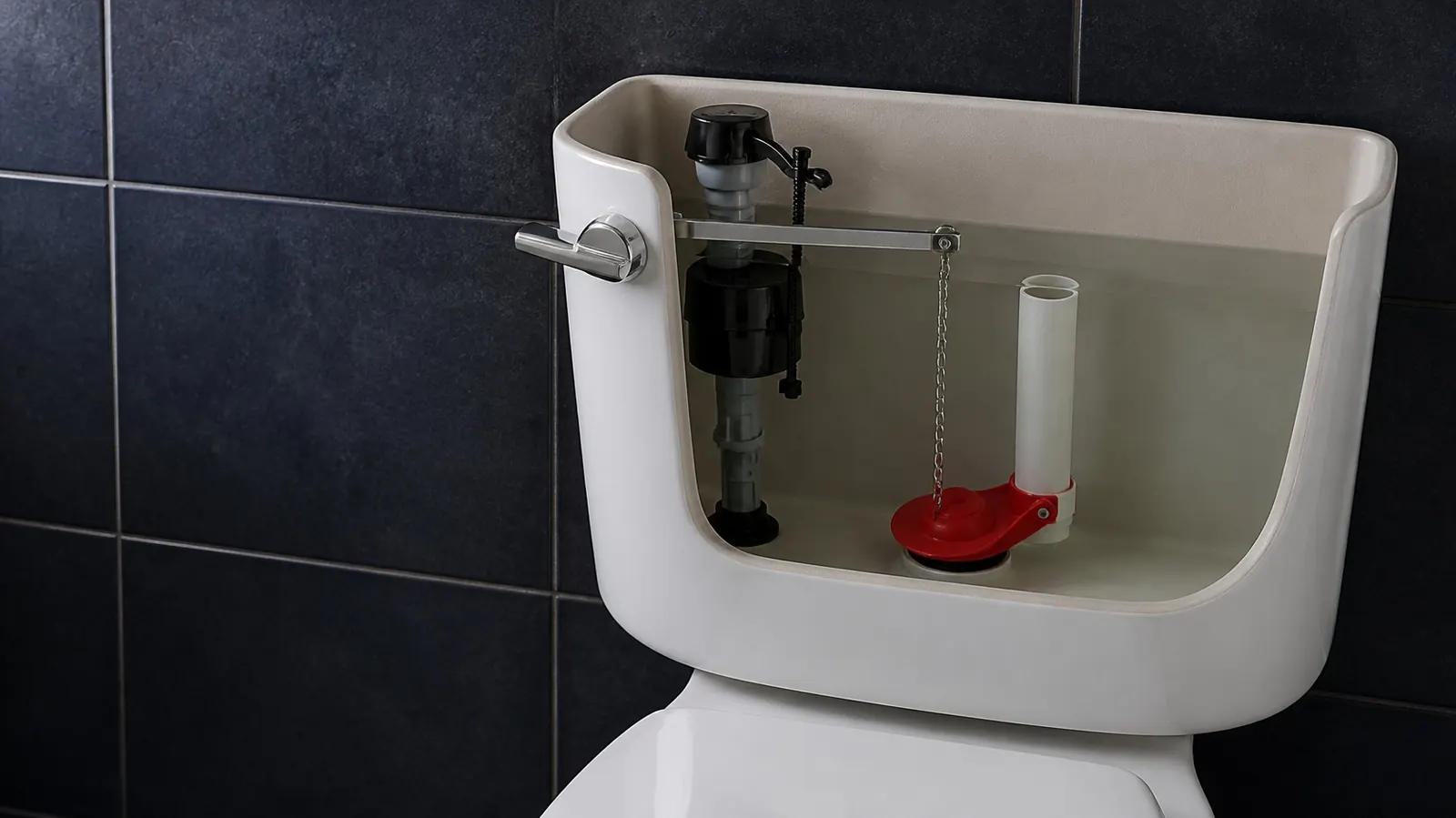
Korky says a chain that is too loose won't lift the flapper all the way, which gives a slow, weak flush; too tight and it won't seal. It recommends 1 to 2 links of slack. Fluidmaster's 400A troubleshooting for a flapper "closing too soon" is the same idea: about ½ inch of slack.
4. Check the water level
Not enough water in the tank also means a weak flush. Fluidmaster and Korky both set the fill level about ½ inch below the top of the overflow tube. Fluidmaster also says the refill tube must send water down the overflow pipe, or the bowl won't refill enough. Korky adds that a float set too low gives weak or incomplete flushes.
Flapper sealing fine but the toilet still runs? See toilet still running after a new flapper.
Sources
Fetched and checked 2026-10-21. Parts and instructions change; check the maker's instructions for your part before buying.
- Fluidmaster: How adjustable toilet flappers work
- Fluidmaster: 2" or 3" flush valve and flapper (FAQ: why the flapper drops so fast)
- Fluidmaster: Choosing the right flapper (adjustable vs non-adjustable)
- Korky: How to replace a toilet flapper (adjusting the band)
- Korky: How to fix a slow flushing toilet
- Fluidmaster 400A fill valve instructions (bowl water too low, chain slack) (PDF)