Buy links on this page go through our /go/ redirects to the manufacturer or retailer. We earn nothing from them today; that may change. Disclosure.
Quick answer
A higher MERV number means the filter catches more small particles. On the EPA's table, a MERV 8 filter has no requirement for the smallest range (0.3 to 1 micron), MERV 11 must catch at least 20% of it, and MERV 13 at least 50%. The EPA suggests MERV 13 or higher if your system can take it.
Furnace filters by rating (check your actual size first):
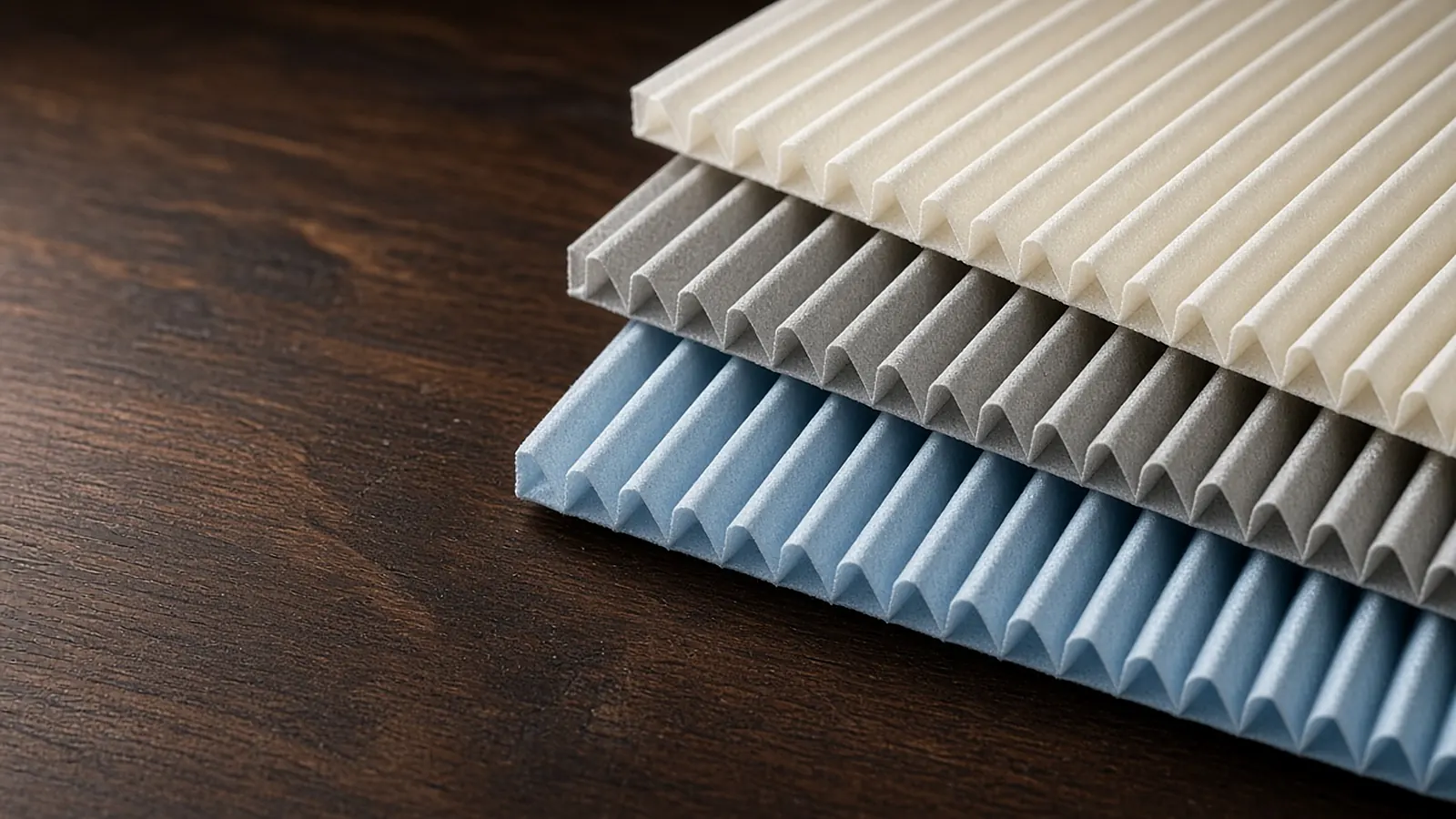
Filtrete MPR 1000 (MERV 11) Filtrete MPR 1900 (MERV 13) Nordic Pure 16x25x1 filtersWhat each rating catches (EPA table)
| MERV | 0.3 to 1 micron | 1 to 3 microns | 3 to 10 microns | Filtrete MPR |
|---|---|---|---|---|
| 7 | no requirement | no requirement | at least 50% | — |
| 8 | no requirement | at least 20% | at least 70% | MPR 700 |
| 11 | at least 20% | at least 65% | at least 85% | MPR 1000 |
| 12 | at least 35% | at least 80% | at least 90% | MPR 1500 |
| 13 | at least 50% | at least 85% | at least 90% | MPR 1900 |
| 14 | at least 75% | at least 90% | at least 95% | MPR 2500 |
The capture figures are minimums from the EPA's MERV table, which follows the ASHRAE test method. The MPR column is Filtrete's own conversion. Filtrete says MPR measures how well a filter captures particles from 0.3 to 1 micron.
What MPR means
MPR (Microparticle Performance Rating) is Filtrete's scale, so you'll only see it on Filtrete boxes. Filtrete lines it up with MERV: MPR 1000 = MERV 11 and MPR 1900 = MERV 13. Its MPR 1000 product page lists the filter as MERV 11.
Should you go to MERV 13?
- The EPA's advice: if you're upgrading, pick a filter rated at least MERV 13, or as high as your system's fan and filter slot can accommodate.
- Check your system first. The EPA notes you may need an HVAC professional to tell you what your system can handle. Your furnace manual may also list a limit.
- Change it on time. Filtrete says any filter used past its recommended life may begin to restrict airflow or cause the heating and cooling system to malfunction. See how often to change it.
How we work: the capture figures come from the EPA's MERV page. MPR conversions come from Filtrete. We don't rate filters ourselves. Sources are listed below.
Questions people ask
What's the difference between MERV 8, 11 and 13?
On the EPA's table, MERV 8 has no requirement for 0.3 to 1 micron particles, MERV 11 must catch at least 20% of them, and MERV 13 at least 50%.
What MERV is Filtrete MPR 1000?
Filtrete lists MPR 1000 as MERV 11, and MPR 1900 as MERV 13.
Should I use a MERV 13 filter?
The EPA suggests at least MERV 13, or as high as your system's fan and filter slot can accommodate. An HVAC technician can tell you what your system can handle.
Sources
Last checked Oct 23, 2026. Turn the furnace, A/C and fan off before you change the filter, as ENERGY STAR says. Check your furnace manual for the filter types and ratings it can take.